
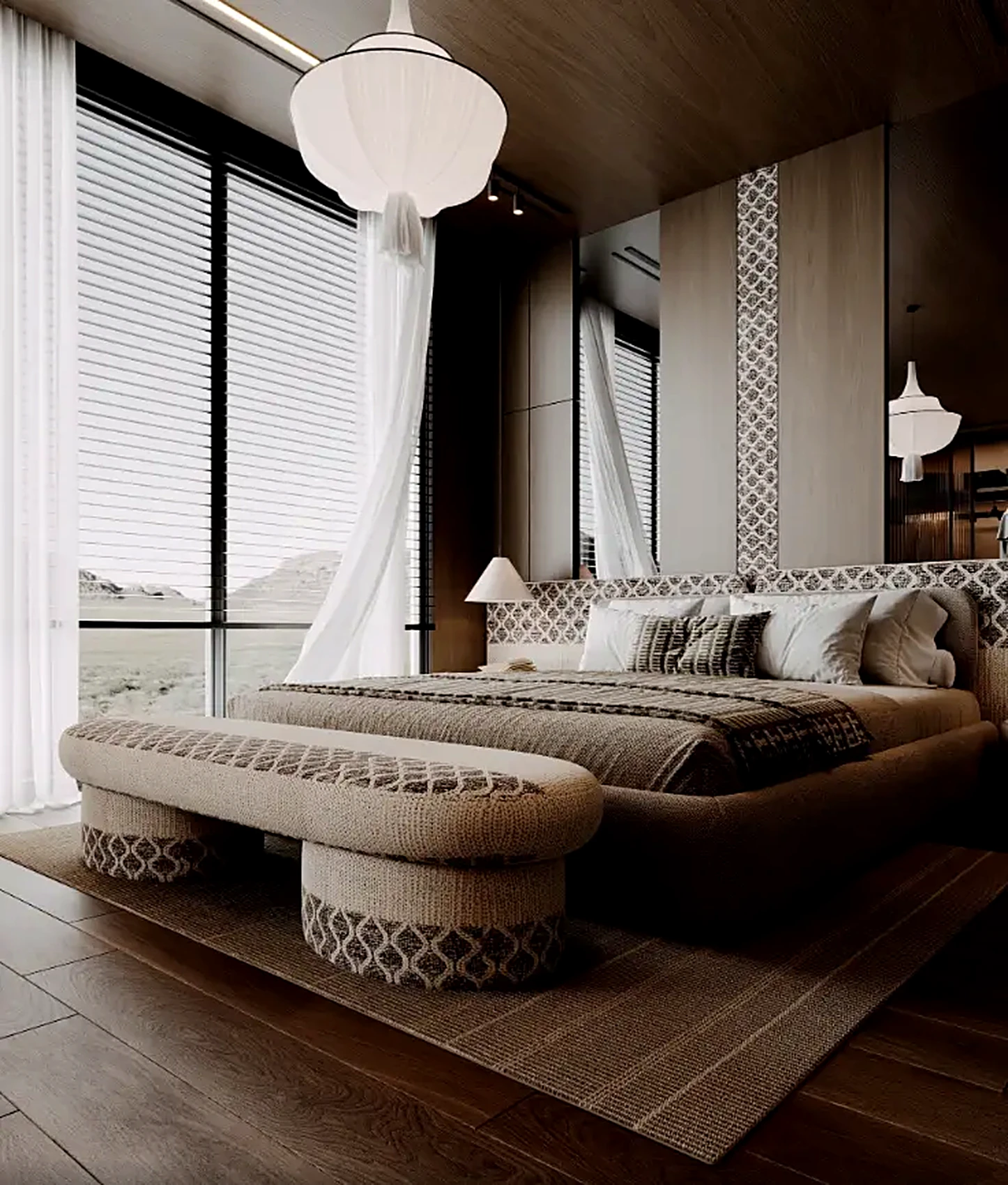


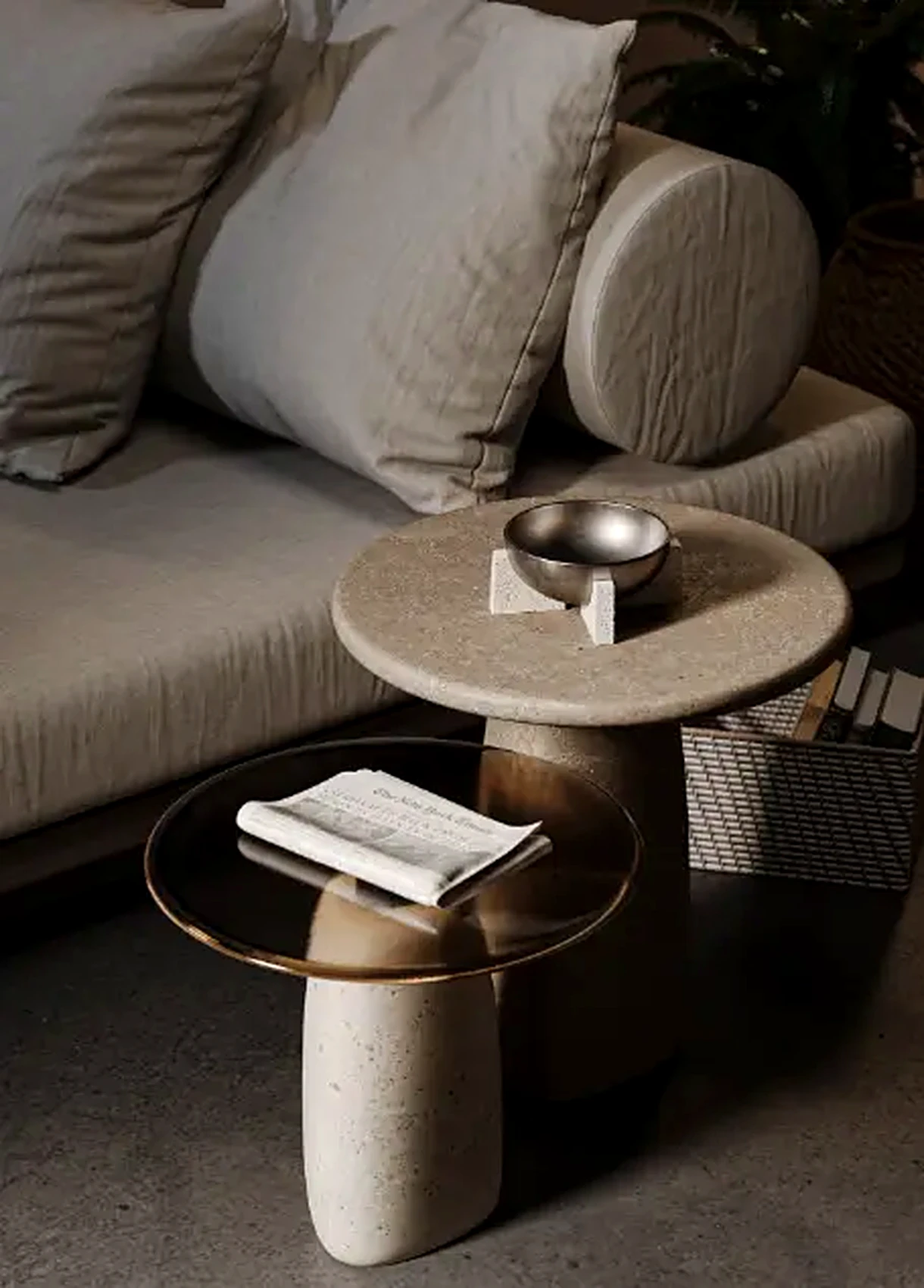

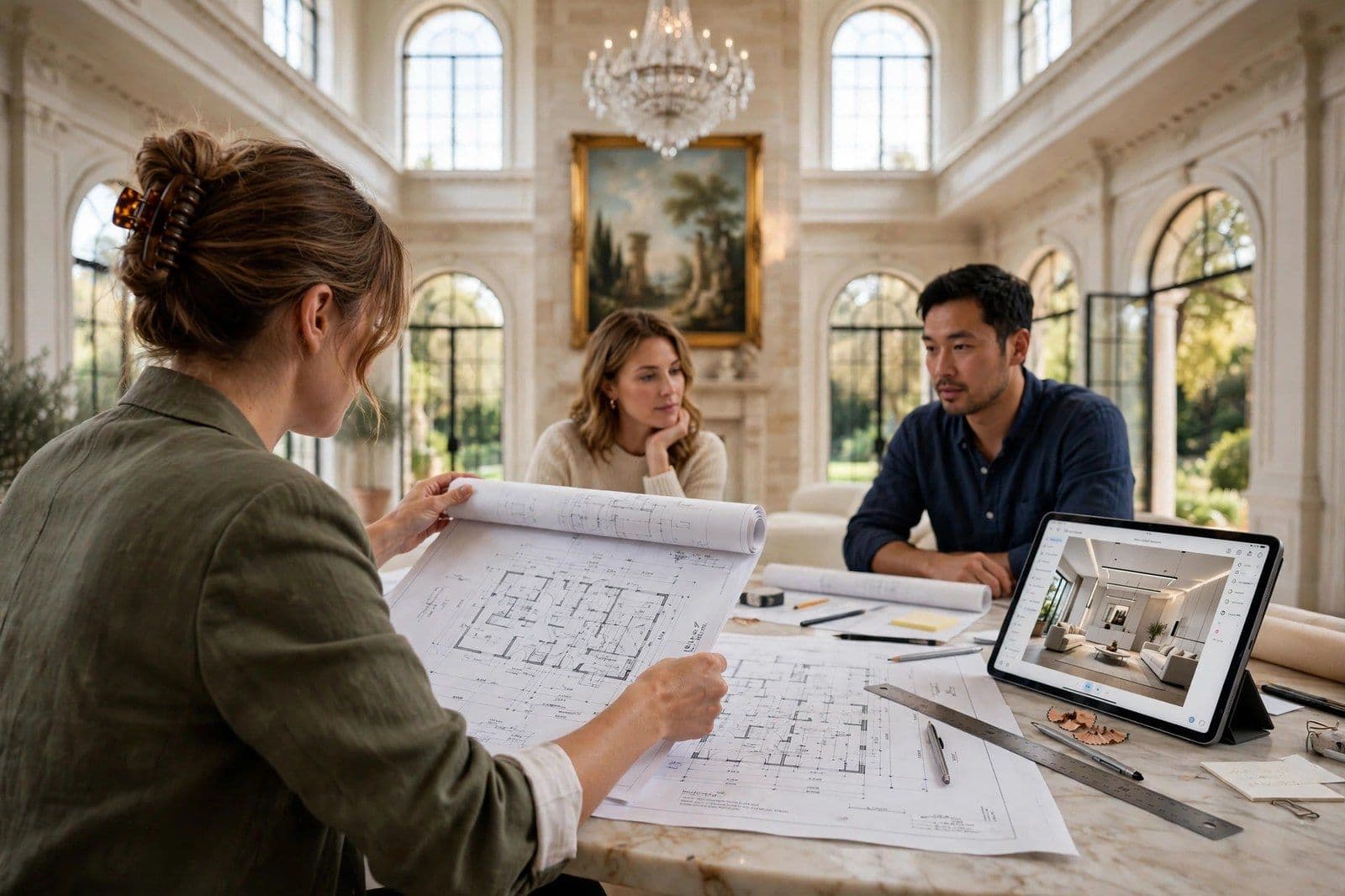
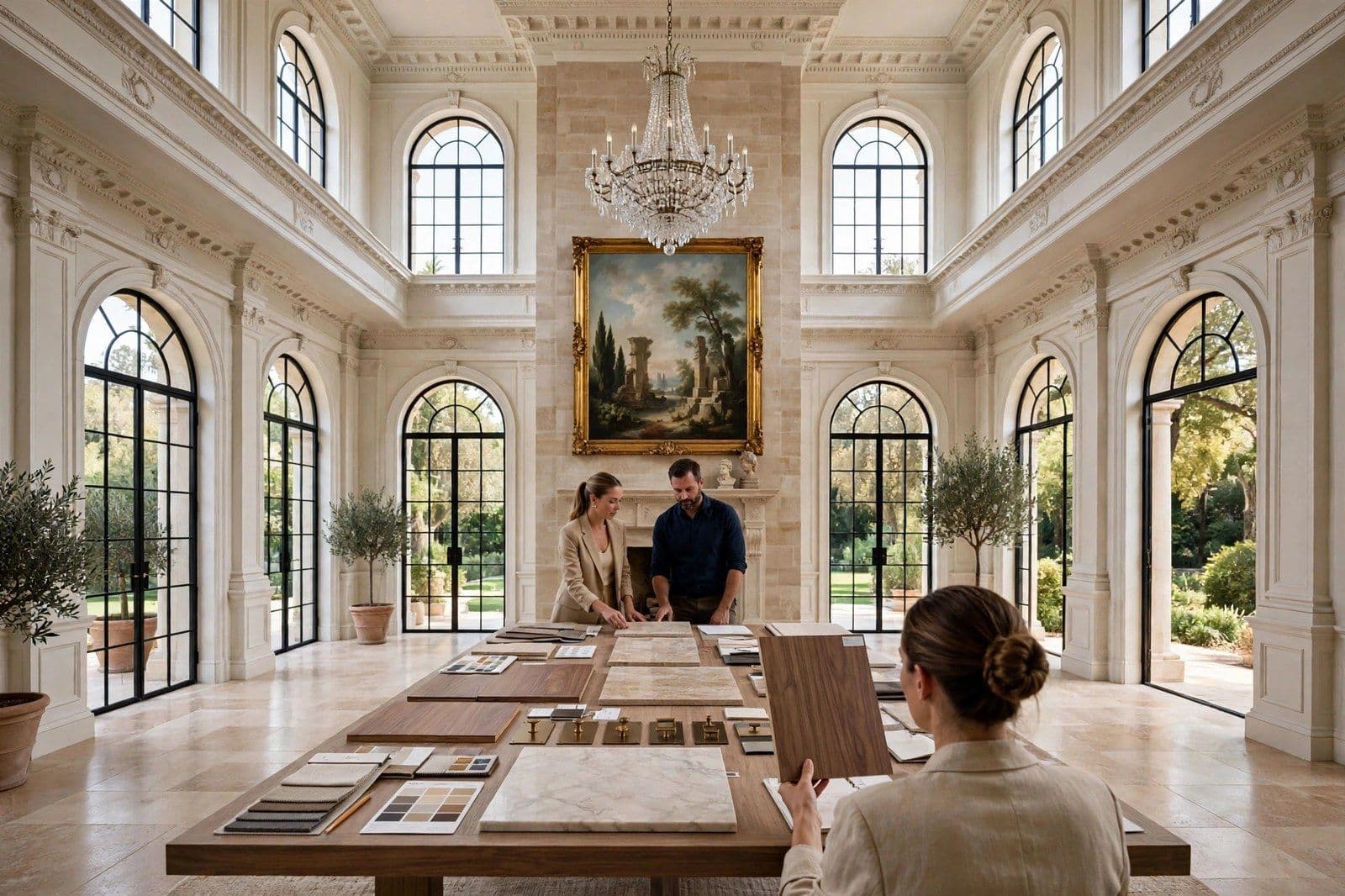
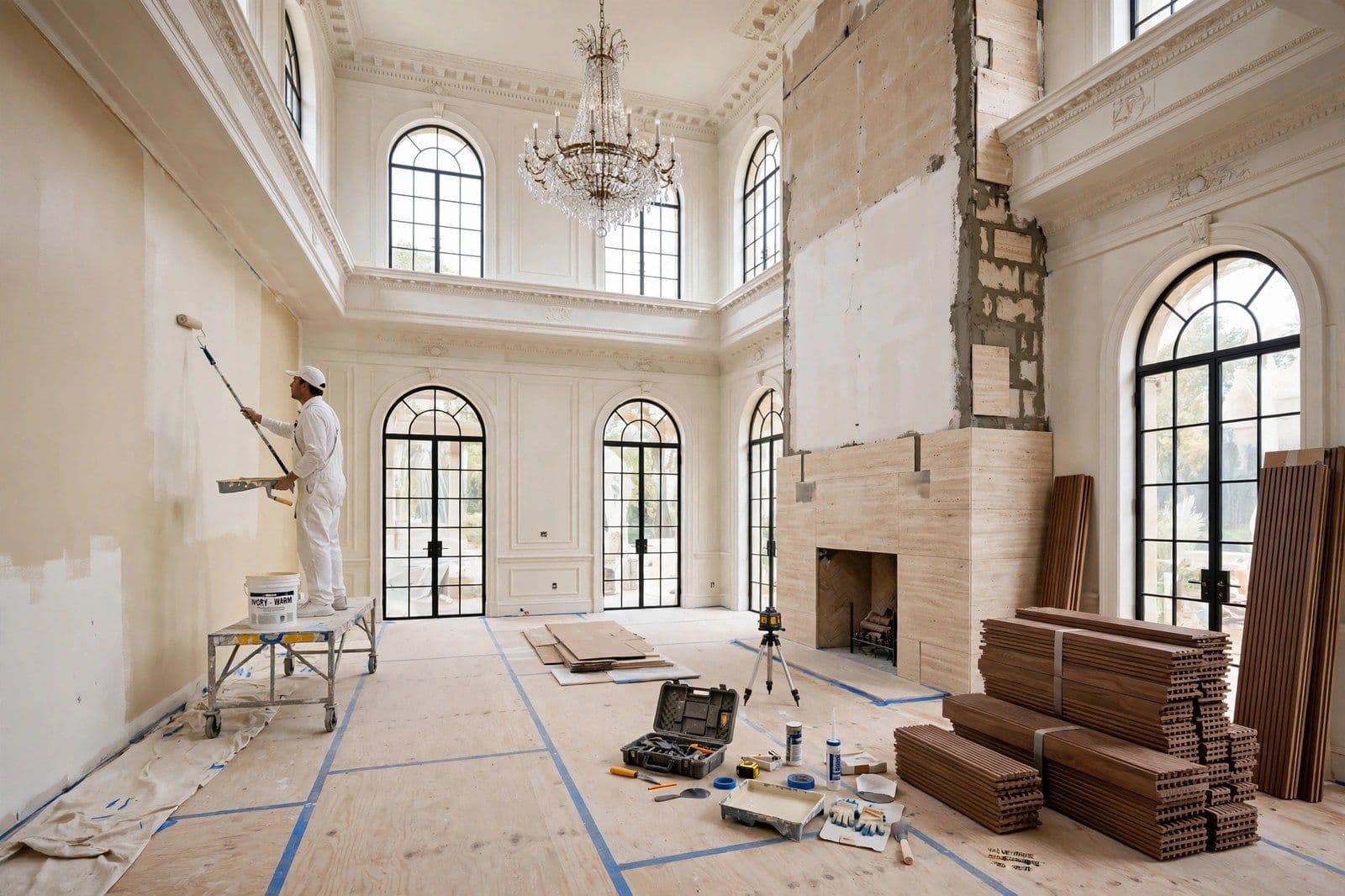

Editorial illustration — not a project photograph.
Materials · 5 min · 27 Oct 2026
Stone remembers everything
A polished floor asks to be protected from the life lived on it. A honed one records that life instead — and is more beautiful in the tenth year than the first.
Read the noteClose
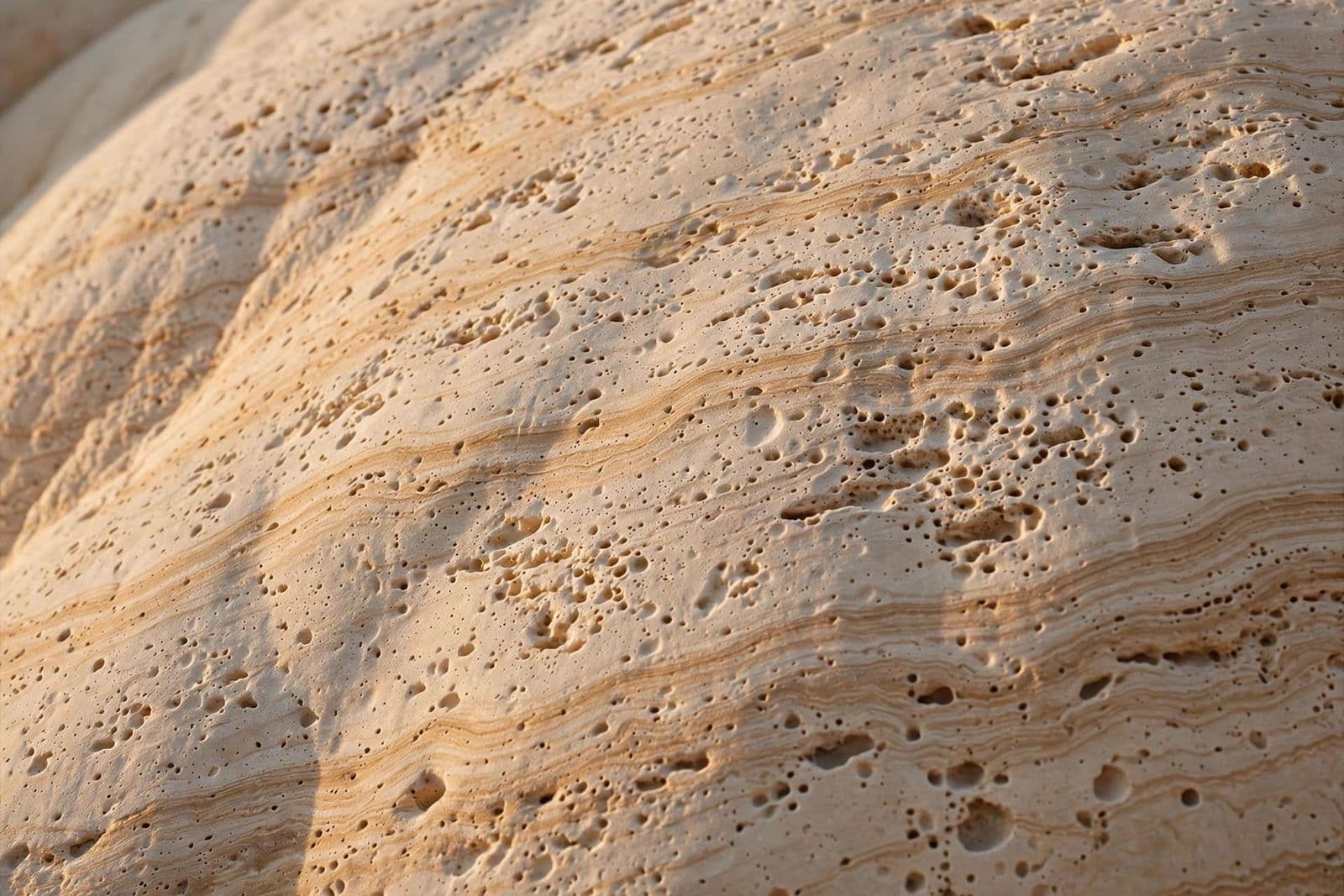
Travertine is a stone that admits its own making. The pits and channels in its surface are the marks of the water that formed it, and no two slabs carry the same record. When we specify it honed rather than polished, we are choosing that record over a mirror.
Polished stone is a photograph of perfection taken on the day of installation. From that day forward, every scratch is a small defeat. Honed stone works the other way: the surface begins matte and quiet, and the household slowly polishes the paths it actually walks. The kitchen threshold deepens. The place by the window, where someone always stands with coffee, takes a faint shine. The floor becomes a map of the family, drawn at walking pace.
We do not ask, “Will it stay perfect?” We ask, “Will it age honestly?”
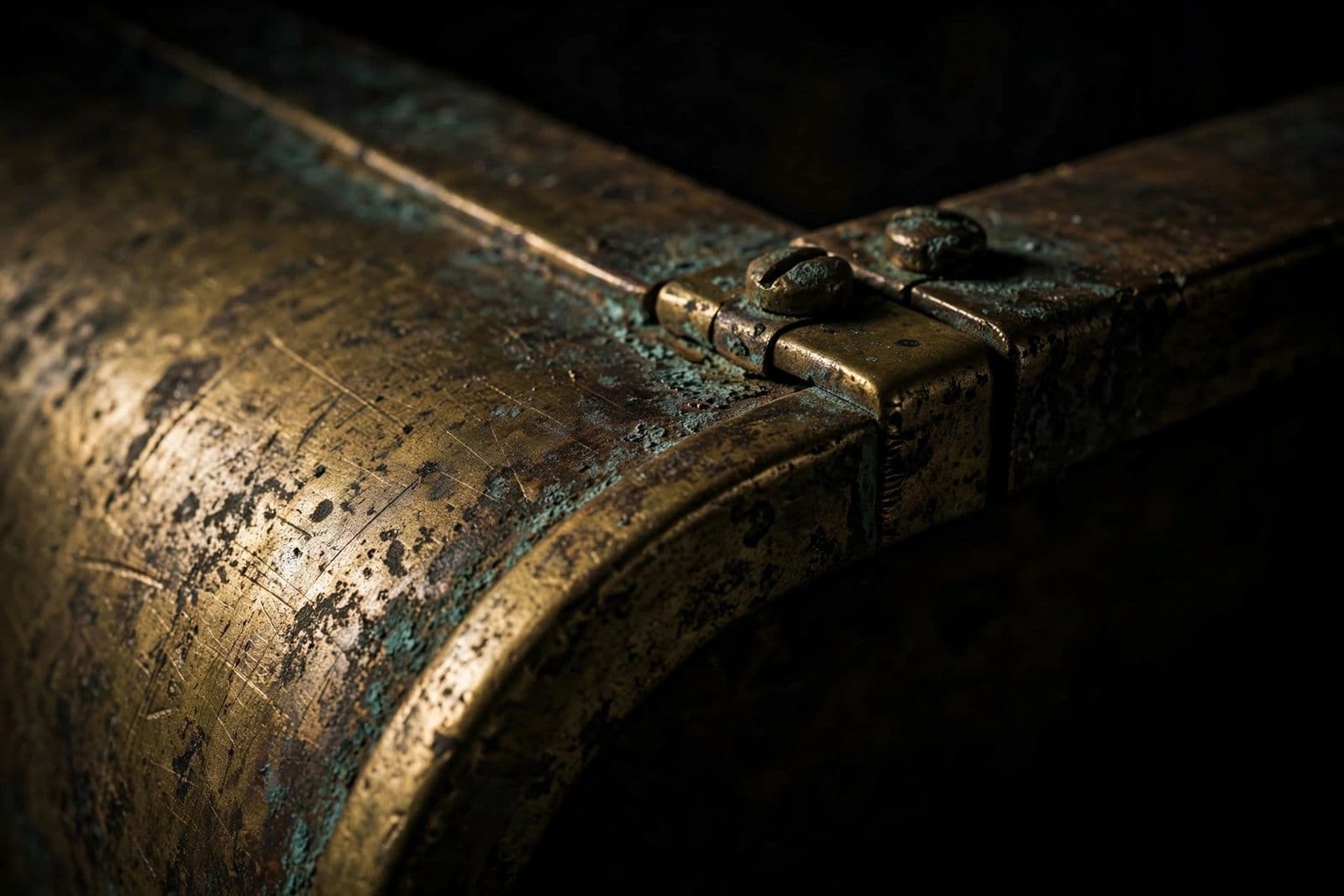
This is the test we apply to every material that enters a project: not how it photographs on completion day, but what ten years of mornings will do to it. Stone, unlacquered brass, solid timber, lime plaster — the materials that pass are the ones that absorb life rather than resist it.
There is a practical side. Honed travertine hides the dust of a real house, forgives a dragged chair, and can be re-honed in place decades from now instead of replaced. But the deeper reason is simpler: a home should not need to be defended from its own inhabitants. The day a floor stops being precious is the day the house starts being lived in.